
LogoFrameless Servo
Start inquiry
LogoFrameless Servo
WhatsApp
LogoFrameless Servo

China-based frameless servo motor factory supporting OEM customization, quality control, and global delivery.

Email RFQ

[email protected]

Send email inquiry

Use email for formal RFQ details, drawings, and specification files.

WhatsApp

+86 18857971991

Start WhatsApp chat

Use WhatsApp for quick pre-RFQ clarification and response.

Products
  • Frameless Servo Motor Kits
  • Torque Motor Series
Solutions
  • Robot Joint Actuation
  • Medical Precision Motion
OEM Capabilities
  • Custom Electromagnetic Design
  • Manufacturing & QC
Resources
  • Blog
  • CAD Download Center
  • Datasheet Library
  • Certifications & Compliance
  • About
  • Contact / RFQ
  • Privacy Policy
  • Cookie Policy
  • Terms of Service
© 2026 Frameless Servo. All Rights Reserved.|China-based OEM frameless servo manufacturing support.
← Back to OEM Capabilities

Custom Electromagnetic Design

OEM collaboration for winding, magnetic circuit, and packaging adaptation to project-specific performance targets.

Best Fit For:Ideal for OEM teams requiring non-standard performance fit.
Custom electromagnetic winding and stator engineering

Capability Highlights

  • Winding and magnetic-constant adaptation support
  • Geometry-level design tradeoff review
  • Engineering closure before sample investment

Typical Engagement Scope

  • New actuator platform
  • Performance upgrade migration

Execution Focus

  • Translate performance target into motor constants
  • Balance torque-speed-thermal tradeoffs
  • Lock critical interfaces before prototype build

Program Decision Criteria

Custom design should start from measurable targets

A useful custom electromagnetic review begins with required torque-speed points, bus voltage, current limit, thermal boundary, and mechanical envelope. Without those inputs, customization becomes guesswork and creates unnecessary sample loops.
Winding changes affect more than torque

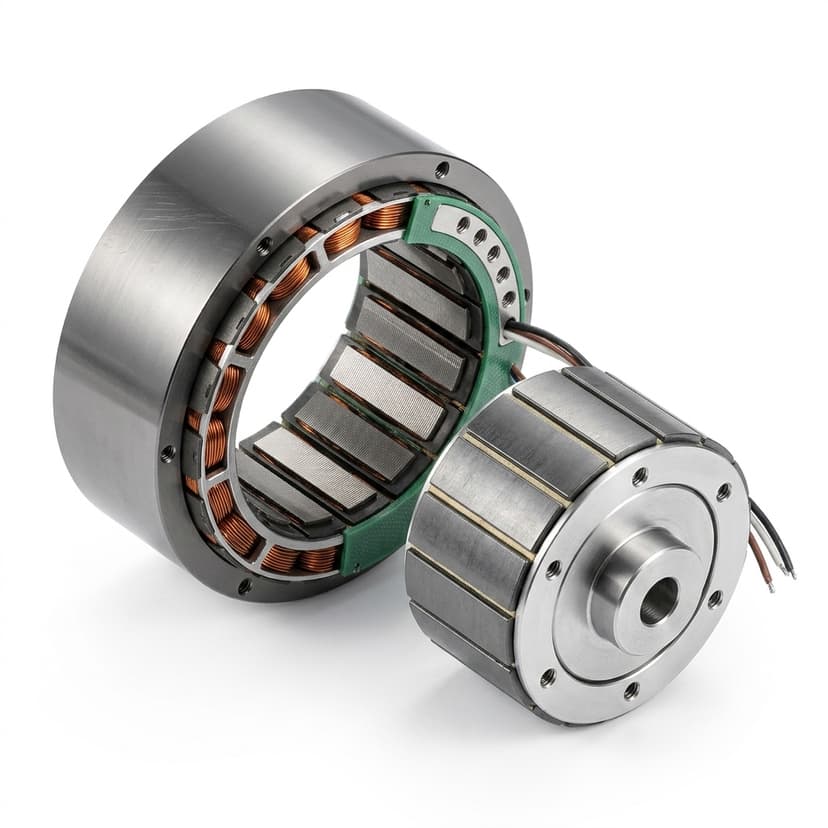
Changing turns, wire gauge, resistance, inductance, or magnet circuit can shift speed ceiling, heat generation, drive tuning, and Back-EMF. Buyers should review the full tradeoff instead of asking only for higher torque.

Revision control protects pilot timelines

Each sample should be tied to a drawing revision, winding assumption, material note, and acceptance gate. This prevents confusion when engineering, purchasing, and factory teams compare different versions.

Program Evaluation Matrix

Program MetricTypical RangeProcurement Value
Design Closure Lead TimeProject dependentFaster requirement closure reduces costly sample iteration loops.
Performance Fit RatioValidated against agreed boundary setShows whether the proposed design meets the project target envelope.

Recommended Control Plan

  1. Requirement closure workshop: Translate buyer targets into a controlled requirement list: OD/ID/stack, torque-speed points, voltage/current limits, thermal assumptions, feedback needs, and compliance documents.
  2. Design tradeoff review: Compare at least one baseline option and one modified option so the buyer understands the cost of higher torque, speed margin, or thermal reserve.
  3. Sample release gate: Freeze drawing revision, winding constants, inspection fields, packaging expectation, and pass/fail criteria before any custom sample build.

Evidence to Request

EvidenceWhy It Matters
Motor constant and winding assumption summaryAsk for the intended Kt/Ke direction, resistance/inductance expectation, and thermal assumption behind the proposed custom winding.
Controlled drawing or CAD revisionUse a revisioned interface file so later changes in slot, cable, connector, or stack height do not enter production silently.
Sample test planRequest which evidence will be returned after sample build: dimensions, Back-EMF, resistance, insulation, no-load current, and visual inspection.

How to Use This Capability in OEM Governance

Use this page as a control framework to separate technical decision, supplier risk, and commercial release. An OEM capability only reduces risk when it becomes a review step, evidence request, and approval responsibility.

Requirement owner

Define who can approve winding, cable, sensor, packaging, documentation, or process changes before sample or PO release.

Minimum evidence

Tie each change to CAD, datasheet, QC record, process photo, test report, or compliance statement according to program risk.

Repeat-order control

For repeat orders, compare revision, lot, outgoing checklist, and packaging before assuming an earlier approval still applies.

RFQ Preparation Checklist

  1. Share target torque-speed boundary and bus constraints
  2. Share envelope, mass, and interface requirements
  3. Define critical-to-quality characteristics

Risk and Mitigation

  • Revision churn before sample release: Use revision freeze gates and owner accountability before build kickoff.
  • Unclear acceptance criteria: Define measurable pass/fail thresholds during design review stage.

When This Capability Is Not a Fit

  • The buyer only needs a catalog motor and has no mechanical or electrical deviation from baseline.
  • The project cannot define acceptance thresholds before sample build.
  • The requested change would require certified final-system validation outside component supplier scope.

Related Products

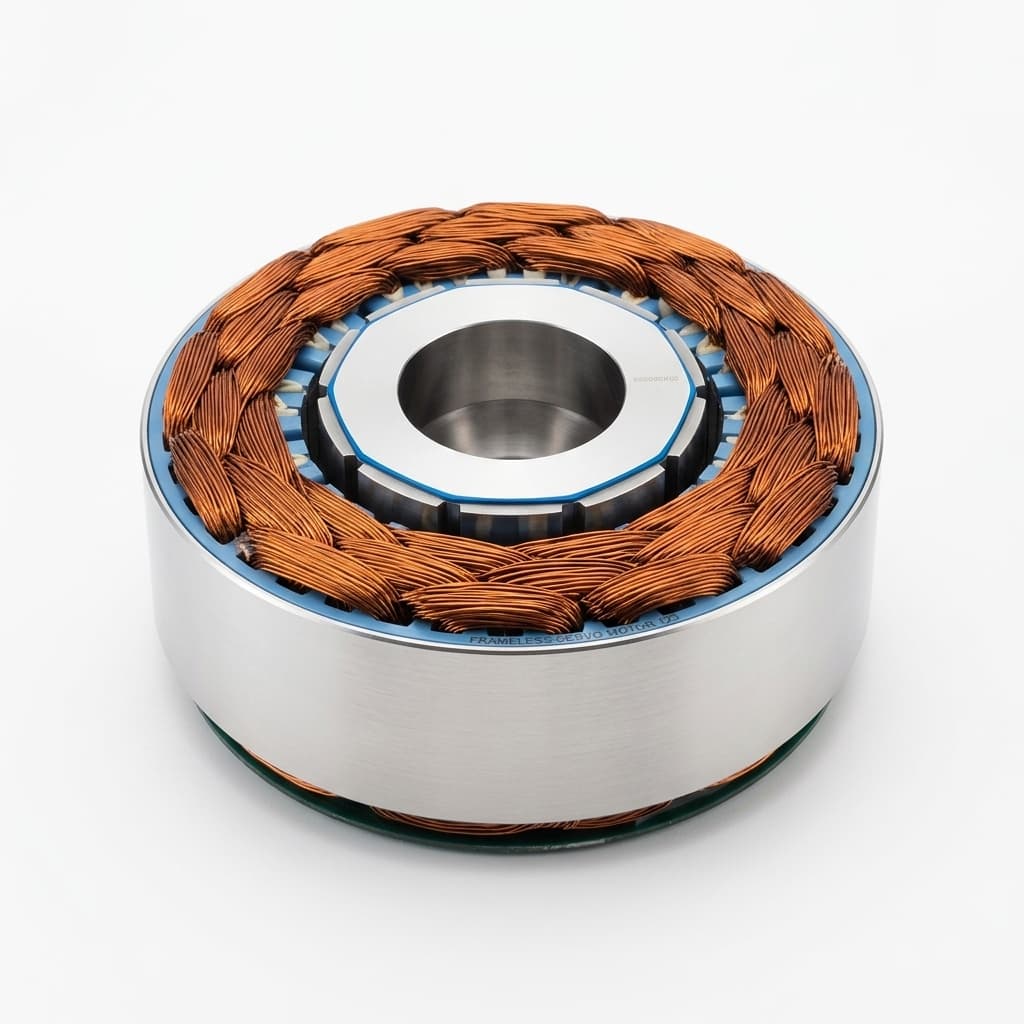
Copper coil stator manufacturing detail

Buyer FAQ

Can custom design start before full commercial negotiation?

Yes. Early engineering alignment is recommended to reduce downstream risk.

Can you support multiple revision rounds?

Yes. We support controlled revision rounds with clear freeze milestones.

Related Resources

  • Products
  • Contact / RFQ

Email RFQ

[email protected]

Send email inquiry

Use email for formal RFQ details, drawings, and specification files.

WhatsApp

+86 18857971991

Start WhatsApp chat

Use WhatsApp for quick pre-RFQ clarification and response.