
Evidence-Based RFQ for Frameless Servo Motors: A Procurement Guide
Build an evidence-based RFQ for frameless servo motors with thermal limits, lot checks, and TCO trade-offs before supplier award using this checklist.
The procurement landscape for direct-drive components has fundamentally shifted. For years, buyers sourced frameless servo motors by comparing "sticker" specifications—peak torque, outer diameter, and price—across supplier catalogs. Today, sophisticated procurement teams and engineering managers are moving toward an evidence-based RFQ (Request for Quotation) process.
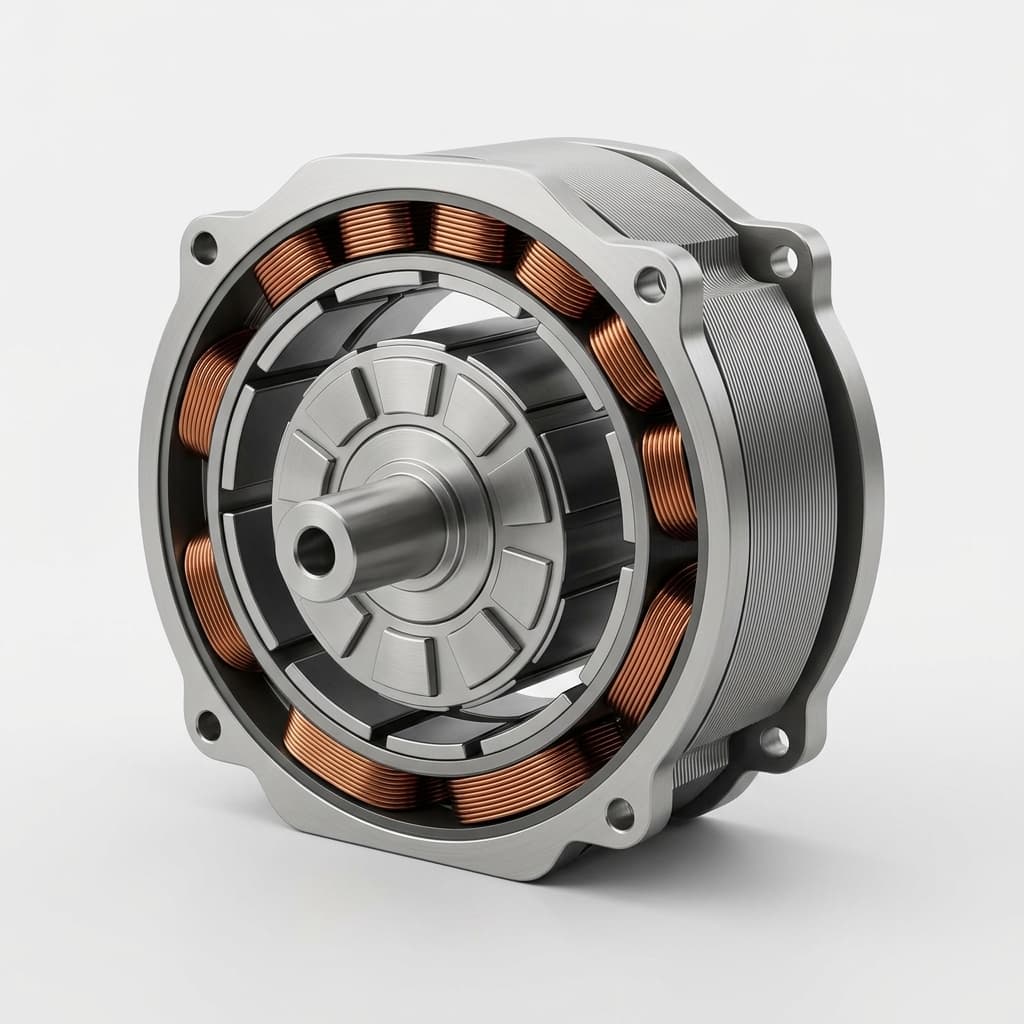
Because a frameless servo motor consists only of a bare rotor and stator, the buyer's mechanical structure becomes the motor's housing and heat sink. This integration risk means that accepting generic catalog data is no longer sufficient. An evidence-based RFQ demands verifiable test conditions, lot-to-lot consistency data, and clear thermal boundaries before awarding a contract.
This guide outlines how to structure your next frameless motor RFQ to avoid costly integration failures and supply chain delays.
For a project already at supplier-shortlist stage, keep the Datasheet Library open while you build the RFQ; it helps convert supplier claims into comparable evidence fields.
Scope, Date, and Limits for Global RFQs
This guide is dated July 19, 2026 and is written for global OEM procurement and engineering teams sourcing frameless servo motor kits for robotics, AGVs, medical devices, gimbals, and other direct-drive assemblies. It is not a substitute for your system-level thermal validation, safety certification, or supplier-specific compliance review; use it to define RFQ evidence and acceptance criteria before samples and purchase orders.
1. Why the Shift to Evidence-Based Procurement?
In traditional motor sourcing (e.g., housed servo motors), the supplier controls the bearings, the shaft, the cooling fins, and the encoder. The thermal and mechanical performance is guaranteed by the manufacturer.
With frameless servo motors, the integration is shared. The supplier provides the electromagnetic core, but your engineering team designs the heat dissipation path, the air gap maintenance, and the bearing support. If a supplier's catalog claims a "Continuous Torque of 2.5 N·m," that number is entirely dependent on the specific aluminum heat sink used during their bench test.
If your procurement team accepts that 2.5 N·m rating without asking how it was measured, you risk severe overheating in the field when the motor is installed in a compact, sealed robotic joint.
The True Cost of Incomplete Specs
- Engineering Delays: Discovering late in the prototype phase that the motor cannot reach the required speed at your 48V bus voltage.
- Production Stalls: Receiving mass-production batches with a 15% variance in phase resistance, causing drive tuning failures.
- Field Failures: Overheating because the supplier's thermal baseline assumed forced air cooling, while your application is a sealed IP67 environment.
2. Core Elements of an Evidence-Based RFQ
When preparing your RFQ, move beyond basic dimensions and target torque. Require suppliers to provide documented evidence for the following parameters.
A. Thermal Baseline Validation
Do not accept a single continuous torque number. Require a Torque-Speed Curve with explicit thermal conditions.
- What to ask for: "Provide the continuous torque curve assuming an ambient temperature of 25°C, winding temperature limit of 130°C, mounted in a closed, unventilated aluminum housing."
- Why: This ensures apples-to-apples comparison between suppliers. Supplier A might look stronger than Supplier B on paper, but only because Supplier A used a massive infinite heat sink during their test.
B. Lot-to-Lot Consistency (Quality Control Data)
A single golden prototype is easy to build. Consistently winding hundreds of stators per month is difficult.
- What to ask for: "Provide the guaranteed maximum variance (%) for Phase-to-Phase Resistance and Back-EMF constant (Ke) across a production batch of 100 units."
- Why: High variance in resistance or Back-EMF means your servo drives will struggle to tune properly in mass production, leading to inconsistent robot joint behavior.
C. Mechanical Tolerances and Air Gap Maintenance
Frameless motors operate with tight air gaps (often 0.3mm to 0.5mm).
- What to ask for: "Provide the necessary concentricity and runout tolerances required for the rotor hub to maintain safe air gap operation."
- Why: If the supplier cannot provide clear integration tolerances, they are pushing the mechanical risk entirely onto your team.
3. The Frameless Servo Motor Procurement Checklist
Use this structured checklist before approving a supplier for prototyping or mass production.
| Verification Item | Action Required by Procurement/Engineering | Risk if Ignored |
|---|---|---|
| Test Condition Baseline | Require torque-speed curves with exact housing size and ambient temp stated. | Motor overheats in field due to over-optimistic catalog specs. |
| Voltage Limits | Verify no-load speed at your specific bus voltage (e.g., 24V or 48V). | Motor fails to reach target speed during high-speed moves. |
| Current Overhead | Check required phase current against your servo drive's peak rating. | Drive faults out before motor reaches required peak torque. |
| Phase Variance | Ask for max allowable variance in resistance/inductance (typically < ±5%). | Inconsistent control tuning in mass production batches. |
| Insulation & Hi-Pot | Verify testing meets IEC 60034 standards for your operating voltage. | Winding shorts and premature failure over the motor lifecycle. |
| Supplier Support | Ensure supplier provides CAD step files and installation guidelines. | Mechanical interference during assembly, damaged stators. |
4. TCO and Industry Standards in 2026
Modern procurement evaluates Total Cost of Ownership (TCO). While frameless motors are generally exempt from standard housed-motor efficiency regulations like IE4/IE5, the system efficiency (motor + drive) is increasingly critical for battery-powered robotics and AGVs.
Standards such as IEC 60034-1 (Rating and Performance) and emerging guidelines around system efficiency (like IEC 61800-9-2) emphasize the importance of matching the motor's winding perfectly to the drive's output. An evidence-based RFQ forces the supplier to prove this match before you commit to a long-term supply agreement.
References on Standards and Market Context:
- IEC 60034-1: Rotating electrical machines - Rating and performance
- IEC 61800-9-2: Ecodesign for motor systems and drive-system efficiency classification
- IFR World Robotics 2024: Robot installations exceed 4 million units worldwide
5. Frequently Asked Questions (FAQ)
Q: Why shouldn't I just buy the motor with the highest peak torque in the catalog? A: Peak torque is a thermal transient limit. If you need that torque for more than a few seconds, or if your cooling is worse than the catalog test conditions, the motor will quickly overheat and fail. You must procure based on continuous thermal boundaries.
Q: How do we verify the supplier's thermal claims? A: An evidence-based RFQ should request the supplier's thermal resistance data (Rth). Better yet, a credible supplier will offer to run a simulated or bench test using a housing dimension that closely mimics your application.
Q: Can we negotiate lower tolerances for cost savings? A: It is highly risky. Lowering the tolerance on stator potting or winding consistency to save upfront costs often leads to massive TCO increases due to drive tuning failures, yield dropouts on the assembly line, and field replacements.
Start Your Evidence-Based Procurement
At Frameless Servo, we believe in transparent, evidence-based engineering. We provide comprehensive torque-speed curves, precise thermal baseline data, and tight lot-to-lot consistency guarantees for all our stators and rotors.
Ready to align your RFQ with real-world engineering?
- Browse our Datasheet Library for detailed, verifiable performance data.
- Speak directly with our engineering team through our Contact / RFQ page to get custom curves tailored to your specific voltage and housing conditions.
Author

Categories
More Posts
Back-EMF Testing for Frameless Motors: Why It Matters in Supplier Quality Control
A practical guide for OEM buyers on using Back-EMF waveform, phase difference, THD, resistance, and insulation checks to qualify frameless motor suppliers.
Position Feedback for Frameless Motors: Magnetic vs. Optical Encoders vs. Resolvers
Compare resolver, optical encoder, and magnetic encoder choices for frameless servo motors. Use the engineering checklist before RFQ or drive selection.
Frameless Servo Motor Stator Potting: A Buyer's Guide to Thermal Management and Torque Density
Learn how stator potting and encapsulation improve thermal dissipation, allowing frameless servo motors to achieve higher continuous torque density in robotics.