
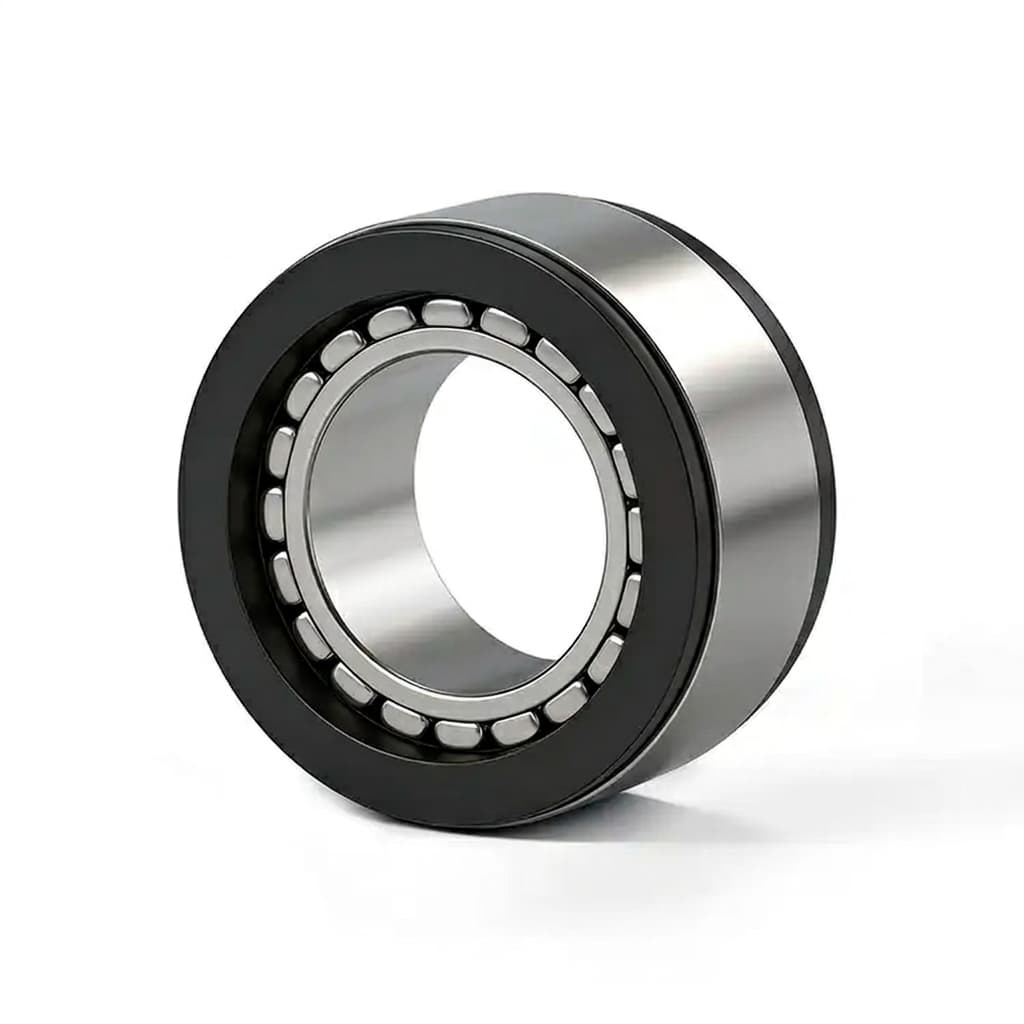
Frameless Servo Motor Stator Potting: A Buyer's Guide to Thermal Management and Torque Density
Learn how stator potting and encapsulation improve thermal dissipation, allowing frameless servo motors to achieve higher continuous torque density in robotics.
When specifying frameless servo motors for humanoid robots, collaborative robots (cobots), or high-precision medical devices, engineers and procurement professionals are constantly pushing for more torque in a smaller package. However, the true limit of a motor's continuous torque is not magnetic—it is thermal.
Because a frameless motor lacks a traditional housing, cooling fins, or an internal fan, it relies entirely on the customer's mechanical structure to dissipate heat. The critical bottleneck in this thermal path is the microscopic air gap between the copper windings and the stator core.
To overcome this bottleneck and drastically increase torque density, high-end motor manufacturers use stator potting and encapsulation. This comprehensive guide explains how this process works, why it is essential for high-performance applications, and how procurement and engineering teams should evaluate supplier potting capabilities.
What is Stator Potting and Encapsulation?
In a standard frameless motor stator, the copper wire is wound tightly around the stator teeth. However, no matter how tightly wound, microscopic pockets of air remain between the individual copper strands and between the windings and the iron core.
Air is an extremely poor conductor of heat (roughly 0.024 W/m·K). When the motor runs continuously, the windings generate heat due to $I^2R$ losses. If this heat cannot escape efficiently, the winding temperature spikes, limiting the current the motor can safely handle—and thereby limiting the continuous torque.
Stator potting (or encapsulation) involves injecting a thermally conductive resin—typically an epoxy or silicone compound—into the stator slots to displace all the air. This process creates a solid, highly conductive bridge from the copper windings directly to the stator core, and ultimately to the machine's external housing.
The Physics: How Heat Dissipation Increases Torque Density
Torque in an electric motor is directly proportional to the current flowing through its windings ($T = K_t \times I$, where $K_t$ is the torque constant). To get more continuous torque out of the same size motor, you must push more continuous current.
However, increased current generates exponential heat, defined by the formula $P = I^2R$ (where $P$ is power loss in watts, $I$ is current, and $R$ is the electrical resistance of the copper winding). Without encapsulation, the heat gets trapped in the windings, quickly reaching the thermal limit of the wire insulation (typically 155°C for Class F or 180°C for Class H). By replacing air with thermal resin, the thermal resistance of the motor drops dramatically.
Material Thermal Conductivity Comparison
To understand the sheer scale of the improvement, we must look at the thermal conductivity values of the materials involved in the stator assembly.
| Material | Thermal Conductivity (W/m·K) | Heat Dissipation Efficiency | Impact on Motor Performance |
|---|---|---|---|
| Trapped Air | ~0.024 | Extremely Poor (Insulator) | Windings overheat quickly; severely limits continuous current. |
| Standard Epoxy Resin | 0.8 - 1.0 | Good | Noticeable increase in continuous torque capacity; suitable for general automation. |
| High-Performance Thermally Conductive Resin | 1.5 - 3.0+ | Excellent | Maximizes torque density; essential for humanoid and cobot joints. |
| Steel (Stator Core Laminations) | 20 - 45 | Very Good | Transfers heat from the resin to the outer diameter of the stator. |
| Aluminum (Customer Housing) | ~205 | Ultimate Heat Sink | Receives heat from the stator to transfer outside the machine entirely. |
By utilizing a resin with a thermal conductivity of 1.5 W/m·K, heat is transferred out of the windings over 60 times faster than through air. This allows the motor to run at significantly higher continuous currents—delivering higher continuous torque—without changing the physical footprint.
Comparing Encapsulation Materials: Epoxy vs. Silicone vs. Polyurethane
Motor manufacturers do not use a single "one size fits all" resin. The choice of potting material profoundly impacts the performance, cost, and longevity of the frameless servo motor. For procurement teams, understanding these differences is key to making an informed buying decision.
1. Epoxy Resins
Epoxy is the most common and robust potting material used in high-performance frameless motors. It offers excellent adhesion to both copper and steel, extremely high mechanical strength, and superior chemical resistance. Epoxy can be heavily filled with thermally conductive particles (like aluminum oxide) to achieve thermal conductivities exceeding 2.0 W/m·K.
- Pros: Highest thermal conductivity, excellent structural rigidity, highly resistant to aggressive chemicals and industrial fluids.
- Cons: Very rigid when fully cured. If the coefficient of thermal expansion (CTE) is not perfectly matched to the copper and steel, extreme temperature fluctuations can cause the epoxy to crack.
2. Silicone Compounds
Silicone potting compounds remain flexible across a massive temperature range (often -50°C to +200°C). This flexibility means that silicone naturally absorbs the stresses of thermal expansion and contraction without cracking.
- Pros: Unmatched thermal shock resistance, excellent high-temperature stability, low stress on delicate components.
- Cons: Generally lower mechanical strength than epoxy, lower adhesion properties, and higher material cost. Thermal conductivity is usually lower (around 1.0 to 1.5 W/m·K) unless heavily modified.
3. Polyurethane Resins
Polyurethanes offer a middle ground, providing more flexibility than epoxies but better mechanical toughness than silicones. They are excellent for low-temperature applications and marine environments.
- Pros: Good flexibility, excellent moisture resistance, cost-effective.
- Cons: Lower maximum operating temperature (often capped around 130°C), making them unsuitable for high-density Class H (180°C) frameless motor applications.
Additional Engineering Benefits Beyond Thermal Management
While torque density is the primary driver for potting frameless motors in modern robotics, the encapsulation process provides several other critical engineering advantages that extend the lifespan of the machine:
1. Structural Stability Against Vibration and Magnetic Forces
High continuous torque and rapid acceleration generate significant electromagnetic forces that cause individual copper wires to vibrate against each other. Over millions of cycles, this microscopic vibration (fretting) can wear away the thin enamel insulation on the wire, leading to a phase-to-phase electrical short. Potting locks every single wire in place into a solid, immovable mass, entirely eliminating vibration-induced failures.
2. Environmental Protection and IP Rating Support
While frameless motors technically have an IP00 rating (because they rely entirely on the customer's housing for sealing), a potted stator is intrinsically highly resistant to the environment. If a robotic joint's outer seal fails, allowing moisture, dust, cutting fluids, or chemical vapors inside, the encapsulated windings remain protected. This provides a crucial second layer of defense in harsh industrial environments.
3. Superior Dielectric Strength and Voltage Isolation
High-quality resins provide robust electrical insulation. As the robotics industry transitions toward higher voltage architectures (such as moving from 48V to 400V or 800V bus systems to reduce cable weight), the risk of electrical arcing increases. Encapsulation prevents arcing and electrical breakdown between phases or from the windings to the grounded iron core, ensuring safety and compliance with high-voltage standards.
The Manufacturing Process: Why Quality Control Matters
Procurement teams must understand that potting is a complex chemical and manufacturing process. Poorly executed encapsulation can actually harm motor performance rather than help it. A sub-standard potting job might look fine from the outside but hide catastrophic flaws internally.
The Danger of Air Bubbles
Pouring resin at normal atmospheric pressure inevitably traps air bubbles inside the dense copper windings. These bubbles act as localized thermal insulators, creating "hot spots" where heat accumulates rapidly. A localized hot spot will burn out the wire insulation in that specific area, destroying the motor even if the average temperature is within limits.
Vacuum Potting (VPI)
World-class manufacturers perform encapsulation in a specialized vacuum chamber. By drawing a deep vacuum before and during the resin injection, all air is evacuated from the stator. When atmospheric pressure is restored, it forces the resin deep into the smallest microscopic crevices, ensuring a 100% void-free fill.
Curing Profiles
The curing process must be carefully controlled using specific temperature profiles. Curing too quickly can induce massive internal mechanical stresses as the resin shrinks, while curing too slowly reduces manufacturing throughput.
Case Study Example: Thermal Derating and Torque Gain in Cobot Joints
To illustrate the financial and engineering impact of stator potting, consider a collaborative robot (cobot) manufacturer designing a new shoulder joint. The design parameters require a continuous holding torque of 5.0 N·m at zero speed to support the extended arm against gravity.
Scenario A: Unpotted Standard Stator Using a standard frameless stator, the thermal resistance from the winding to the housing is high. To achieve 5.0 N·m without exceeding the 155°C insulation limit, the engineers must select a motor with an outer diameter (OD) of 115mm and a stack length of 50mm. The motor weighs 1.8 kg. The large diameter forces the entire shoulder joint to be bulky, increasing the weight the subsequent base joint must carry.
Scenario B: Vacuum Encapsulated Stator By upgrading to a vacuum-potted stator using a 1.8 W/m·K epoxy resin, the thermal resistance drops. The same continuous current can now be pushed through a much smaller motor without overheating. The engineers can select a motor with an 85mm OD and a 35mm stack length. This encapsulated motor still delivers the required 5.0 N·m continuous torque but weighs only 0.9 kg.
The ROI of Potting:
- Weight Reduction: The motor weight is cut in half (1.8 kg vs 0.9 kg).
- Compounding Efficiency: Because the shoulder is lighter, the base joint requires less torque, allowing a smaller motor there as well.
- Cost: While the potting process adds a marginal manufacturing cost to the 85mm stator, the savings from using less copper, less magnetic steel, and smaller housing components result in a net cost reduction for the overall cobot arm.
This case study demonstrates why virtually all tier-one robotics manufacturers mandate vacuum encapsulation for their frameless servo motors.
Evaluating Supplier Potting Capabilities: A Procurement Checklist
When sourcing high-torque-density frameless servo motors, the potting process cannot be an afterthought. Use this detailed checklist to audit a supplier's encapsulation capabilities during the RFQ or site visit stage.
- Vacuum Processing Validation: Does the supplier utilize vacuum encapsulation equipment, and can they provide cross-sectional microscopy data proving a void-free fill?
- Thermal Conductivity Specification: Can the supplier state the exact W/m·K value of their potting compound? (Look for values > 1.0 W/m·K for high-performance applications).
- Material Selection: Has the supplier clearly identified whether they use epoxy, silicone, or polyurethane, and justified this choice based on your operating temperature?
- Glass Transition Temperature ($T_g$): Is the resin's $T_g$ significantly higher than the motor's maximum rated continuous operating temperature?
- Thermal Shock Testing: Has the supplier tested the potted stator through aggressive thermal cycling (e.g., -40°C to +150°C for 100+ cycles) to prove the resin will not crack over the motor's lifespan?
- Continuous Torque Curve Baseline: Are the provided torque-speed curves generated using the encapsulated design, and is the assumed external heat sink (housing material and size) clearly documented on the datasheet?
- Dielectric Testing (Hi-Pot): Is 100% of the production volume Hi-Pot tested after the potting process to ensure no insulation damage occurred during curing?
Frequently Asked Questions (FAQ)
Q: Does potting increase the peak torque of the frameless motor? A: Generally, no. Peak torque is limited primarily by the magnetic saturation of the steel core and the maximum peak current limit of your servo drive. Potting primarily increases the continuous torque by allowing the motor to dissipate the heat from higher continuous RMS currents without melting the wire insulation.
Q: Does encapsulation add significant weight to the robot joint? A: The resin does add a small amount of mass compared to empty air. However, because encapsulation allows a smaller, lighter motor to do the work of a much larger motor (massive increase in torque density), the overall system weight of the robotic joint typically decreases significantly.
Q: Can a potted frameless stator be repaired or rewound if a winding burns out? A: No. Once a stator is vacuum encapsulated with high-strength epoxy, it becomes a single, indestructible solid component. The resin cannot be chemically or thermally removed without destroying the core. Therefore, the reliability of the original potting process must be flawless to prevent burnouts.
Q: If the motor is potted, do I still need to worry about my housing's thermal design? A: Absolutely. The potting compound only moves the heat efficiently from the windings to the outer diameter of the stator core. The stator core must still be intimately mated (usually via shrink fit or thermal paste) to an aluminum or steel housing that has enough surface area to dissipate the heat into the ambient environment.
Q: Are there any applications where potting is not recommended? A: In highly cost-sensitive, low-duty-cycle applications where the motor rarely runs continuously (e.g., a simple indexing table that moves once a minute), the extra cost of vacuum potting may not yield a return on investment.
Q: How does potting affect the inductance of the motor? A: Potting compounds are non-magnetic and do not significantly alter the inductance or the electromagnetic profile (Kt, Kv) of the motor. The changes are strictly thermal and structural.
Source Verification
The technical principles discussed in this guide are supported by the following industry and academic research:
- MagnetsChina: Frameless Motor Basics and Encapsulation - Highlights the necessity of filling air gaps with thermally conductive resin to protect windings and drastically improve the heat path.
- Kisling: Adhesives and Potting for Electric Motors - Outlines thermal conductivity values (1.0 - 2.0 W/m·K) required for modern stator potting and the differences in resin formulations.
- Wevo-Chemie: Potting Solutions for E-Mobility - Details how reducing thermal resistance mathematically lowers winding temperatures and extends insulation lifespan in high-voltage motors.
- MDPI: Thermal Analysis of Encapsulated Electric Motors - Academic research confirming the direct empirical correlation between resin thermal conductivity and increased continuous torque density in servo applications.
- Windings.com: Benefits of Stator Encapsulation - Explains the structural stability, fretting vibration resistance, and environmental protection provided by high-grade potting.
Discuss Your Frameless Motor Application
Proper thermal management is the difference between a prototype that looks good on paper and a production machine that survives in the field for a decade. If you are developing a high-torque-density robotic joint, exoskeleton, or medical axis, the thermal path must be engineered from day one.
Review our Datasheet Library to compare continuous torque ratings across our frameless servo motor sizes, or contact our engineering team via our Contact / RFQ page to discuss potting options, thermal derating, and custom stator integrations.
Author

Categories
More Posts
Position Feedback for Frameless Motors: Magnetic vs. Optical Encoders vs. Resolvers
Compare resolver, optical encoder, and magnetic encoder choices for frameless servo motors. Use the engineering checklist before RFQ or drive selection.
Back-EMF Testing for Frameless Motors: Why It Matters in Supplier Quality Control
A practical guide for OEM buyers on using Back-EMF waveform, phase difference, THD, resistance, and insulation checks to qualify frameless motor suppliers.
How to Read a Frameless Servo Motor Torque-Speed Curve Before You Select a Motor
Learn how engineers should interpret continuous torque, peak torque, bus voltage, thermal limits, and duty cycle when reading torque-speed curves for frameless servo motors.