LogoFrameless Servo
Start inquiry
LogoFrameless Servo
WhatsApp
LogoFrameless Servo

China-based frameless servo motor factory supporting OEM customization, quality control, and global delivery.

Email RFQ

[email protected]

Send email inquiry

Use email for formal RFQ details, drawings, and specification files.

WhatsApp

+86 18857971991

Start WhatsApp chat

Use WhatsApp for quick pre-RFQ clarification and response.

Products
  • Frameless Servo Motor Kits
  • Torque Motor Series
Solutions
  • Robot Joint Actuation
  • Medical Precision Motion
OEM Capabilities
  • Custom Electromagnetic Design
  • Manufacturing & QC
Resources
  • Blog
  • CAD Download Center
  • Datasheet Library
  • Certifications & Compliance
  • About
  • Contact / RFQ
  • Privacy Policy
  • Cookie Policy
  • Terms of Service
© 2026 Frameless Servo. All Rights Reserved.|China-based OEM frameless servo manufacturing support.
Hybrid encoder tool + decision report

1024 PPR incremental encoder checker for CPR, quadrature, and count-bandwidth risk

Start with the tool: enter PPR, decoding mode, RPM, tolerance, controller edge-rate limit, output driver, and environment. The report below explains why the result is reliable, where it can fail, and why the 1024 PPR incremental encoder query belongs on this single canonical page.

Run the checkerSee canonical mapping
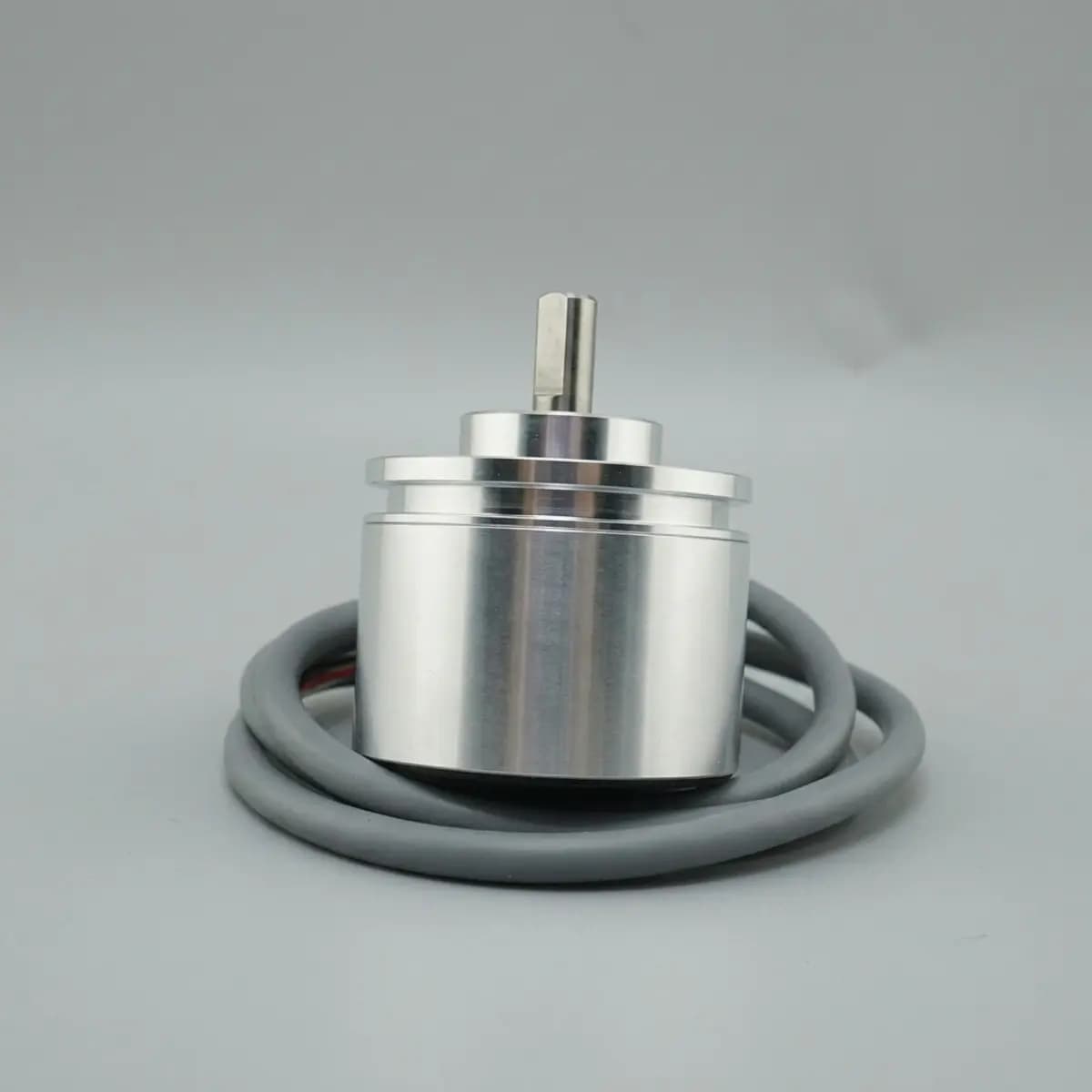
Industrial incremental encoder used to check 1024 PPR quadrature count-bandwidth fit
A 1024 PPR incremental encoder decision still depends on decoding mode, counter bandwidth, output driver, cable run, sealing, mounting, and installed accuracy.
AB shiftedx4 counts each edge

Quadrature A/B edges explain why 1024 PPR can become 4096 countable counts when x4 decoding is used.

10244096204.8 kHzrequired edge rate vs controller limit

PPR, decoding, and RPM must fit inside the controller edge-rate limit with usable margin.

Tool First

1024 PPR Incremental Encoder Fit Checker

Use this first-pass checker to convert PPR into countable counts, angular step, required edge rate, controller headroom, risk flags, and a next action. Defaults match the alias query: 1024 PPR incremental encoder with x4 quadrature decoding.

Boundaries: PPR 1-100,000, speed 1-20,000 RPM, tolerance 0.0001-30 deg, edge rate 100-20,000,000 Hz.

Empty state: run the checker to see countable counts, angular step, edge-rate demand, fit tier, uncertainty, and next actions.

Advisory boundary: this calculator is a deterministic pre-RFQ screen. Final approval still requires the exact encoder datasheet, controller input specification, installed cable, EMC review, and mounted accuracy test.

Tool value first

The calculator handles empty, loading, error, and boundary states before the report asks for attention.

Canonical URL

`/learn/incremental-encoder` covers incremental encoder and the 1024 PPR incremental encoder alias in one route.

Evidence status

Research updated 2026-07-26. Review cadence: 6 months. Public evidence supports screening logic, not a final part-number guarantee.

Decision summary

What the 1024 PPR result means before you source an encoder

The useful answer is not just a count conversion. It is whether that count conversion survives the controller, homing, wiring, speed, environment, and accuracy checks.

1024 PPR with x4

4096 counts/rev

A quadrature counter using x4 decoding can count four edges per PPR line pair.

Angular step

0.0879 deg

This is resolution screening, not final axis accuracy.

3000 RPM edge demand

204.8 kHz

The controller high-speed counter must exceed this with margin.

Best default driver

Line driver

Differential A/B/Z reduces noise risk on industrial cable runs.

Canonical decision

/learn/incremental-encoder

1024 PPR incremental encoder is answered here as an alias, not as a separate page.

incremental encoder1024 PPR aliasone canonical URL

Route decision: merge `1024 ppr incremental encoder` into the canonical incremental encoder page. No dedicated alias route is published.

Canonical mapping

1024 PPR incremental encoder is an alias, not a competing page

The alias asks for a specific resolution variant of an incremental encoder. A separate URL would mostly repeat the same PPR, CPR, quadrature, wiring, and fit-limit explanation. This canonical page answers the exact 1024 PPR question in the tool while preserving one page for the intent cluster.

Alias keyword1024 ppr incremental encoder
Canonical keywordincremental encoder
Canonical route/learn/incremental-encoder
Dedicated alias routeNo
Specific alias answer1024 PPR x4 = 4096 countable counts/rev, then check edge rate and accuracy limits
Method

How the checker turns PPR into a decision

The calculation is deterministic. The recommendation layer is conservative because encoder math can pass while wiring, homing, contamination, or installed mechanics still fail.

StepFormulaDefault outputBoundary
Convert PPR to countable countsPPR x decoding multiplier1024 PPR x4 = 4096 counts/revOnly true when the controller is configured for x4 quadrature edge counting.
Calculate angular step360 / countable counts360 / 4096 = 0.0879 deg per countAngular step is resolution. Accuracy still depends on installation and mechanics.
Screen quantizationangular step / 20.0439 deg half-step for the default caseIf the requested tolerance is tighter, change PPR or prove interpolation accuracy.
Calculate edge-rate demandRPM x countable counts / 603000 RPM x 4096 / 60 = 204800 HzController input filtering, cable length, and acceleration peaks need extra margin.
Check headroomcontroller edge-rate limit / required edge rate500000 / 204800 = 2.44xUse 1.5x as a minimum screen and prefer about 2x before production release.
PPRRPMCounterPilotscreen math first, then validate the mounted axis

The report layer explains why the tool result is only a pre-RFQ screen. A real release still needs mounted axis testing.

Evidence and dates

Source-backed assumptions and known limits

These sources support terminology, formulas, accuracy boundaries, and environmental caution. They do not replace the exact encoder datasheet for a supplier quote.

SourceCheckedEvidence usedDecision use
Dynapar Encoder Basics2026-07-26Explains incremental encoder operation, quadrature concepts, and selection tradeoffs between encoder technologies.Supports the page distinction between resolution screening, output signal selection, and environmental limits.
Encoder Products Company encoder education2026-07-26Manufacturer education material defines common rotary encoder vocabulary such as PPR, CPR, quadrature, and index channels.Supports using 1024 PPR as a concrete incremental encoder example inside the broader canonical topic.
OMRON Rotary Encoders Technical Guide2026-07-26Guide-level formulas connect encoder resolution, shaft speed, and response frequency for first-pass counter sizing.Supports the checker formula for required edge rate and high-speed counter margin.
Renishaw rotary encoder accuracy white paper2026-07-26Separates resolution from accuracy by discussing scale, readhead, interpolation, installation, and eccentricity effects.Prevents over-claiming that 1024 PPR or 4096 counts/rev guarantees finished machine accuracy.
IEC 60529 ingress-protection scope2026-07-26Defines enclosure protection degrees for solid object and water ingress under specified test conditions.Supports requiring exact sealing evidence for dust, coolant, oil mist, connectors, and shaft openings.

Uncertainty disclosure

Public sources rarely publish field failure rates by PPR, contamination chemistry, cable routing, or controller filter setting. When those details decide the design, the page marks the result as a validation item instead of inventing a universal pass threshold.

Alternatives

Incremental, absolute, magnetic, and resolver tradeoffs

The 1024 PPR question usually starts as a resolution lookup, but the real decision includes startup behavior, count bandwidth, noise, environment, and integration cost.

DimensionIncrementalAbsoluteResolver / magneticDecision
Startup positionNeeds homing or an index/reference strategyPosition is available after startup if protocol and turn data are validDepends on resolver converter or magnetic encoder architectureUse incremental when homing is acceptable and cost/count bandwidth matter more than power-cycle position.
Signal bandwidthPPR and RPM directly increase edge-rate demandFrame length, clock rate, and update interval dominateAnalog conversion or digital sampling chain dominatesFor 1024 PPR at high RPM, check counter edge-rate before selecting the encoder.
Noise toleranceBest with differential A/B/Z and proper shieldingDepends on protocol, cable, CRC, grounding, and receiver designOften robust in contamination, but needs converter and calibration checksOpen collector should be treated as conditional for fast or noisy industrial axes.
EnvironmentOptical incremental units need sealing evidence in dust, oil, or coolantSame sensing principle risks apply; absolute does not automatically mean sealedMay deserve a pilot where optical paths are exposed to contaminationSelect by exposure profile, not by the word incremental alone.
Cost and integrationUsually simple and broadly supported by drives and PLC countersHigher integration burden, but removes repeat homing in many systemsCan add converter cost or calibration workUse the cheapest architecture only after bandwidth, homing, and environment are resolved.
lower riskhigher riskimpact

The risk matrix prioritizes counter overload, output-driver mismatch, contamination, and accuracy over-claim because they can change the selection after the PPR math looks correct.

Risks and mitigations

Failure modes to resolve before design lock

RiskTriggerImpactMitigation
PPR mistaken for final accuracy4096 counts/rev is used as a machine accuracy promiseThe axis misses tolerance after runout, backlash, and mounting error appearTreat PPR as resolution. Request mounted accuracy, repeatability, and mechanical stack data.
Counter overload1024 PPR x4 is paired with high RPM and a slow PLC inputLost counts, drift, intermittent position jumps, or nuisance faultsCalculate required edge rate and validate with input filters, real cable length, and peak speed.
Wrong output driverOpen collector or single-ended output is used on long/noisy cable runsSlow edges and noise produce false countsPrefer differential line driver, receiver threshold review, shielding, and routing separation.
Missing index strategyA/B channels are specified but Z index or homing logic is not lockedThe axis cannot establish repeatable reference after power cycleConfirm Z pulse width, capture timing, home switch relationship, and software routine.
Contamination mismatchDust, oil mist, coolant, or condensation reaches optical paths or connectorsIntermittent signal loss and field service issuesRequire sealing evidence and compare magnetic/resolver feedback when the environment is hostile.
Scenario checks

Where the same 1024 PPR encoder can pass or fail

Same PPR, different result. The environment, RPM, cable, output driver, homing strategy, and required tolerance change the fit tier.

Packaging indexer

Assumptions: 1024 PPR, x4, 3000 RPM, line driver, clean cabinet

Result: Strong shortlist if the controller has at least 300 kHz capacity and homing is acceptable.

Next step: Validate repeatability, cable routing, and maximum-speed counter capture on a pilot axis.

AGV wheel speed feedback

Assumptions: 1024 PPR, x2 or x4, vibration, long harness, moderate RPM

Result: Conditional fit because noise, connector strain, and contamination can dominate the math.

Next step: Use differential signaling and compare mounted feedback against wheel speed measurement.

Compact servo joint

Assumptions: 1024 PPR, short cable, tight packaging, fine position target

Result: Possible fit, but bearing runout and assembly alignment need more attention than the PPR number.

Next step: Request mounted accuracy and assembly tolerance evidence with the exact encoder package.

Coolant-adjacent spindle

Assumptions: 1024 PPR, high RPM, oil mist, limited maintenance access

Result: Often not a default fit unless the encoder is sealed and validated for the fluid exposure.

Next step: Pilot sealed optical against magnetic or resolver feedback under the same coolant and speed profile.

Acceptance checklist

Minimum checks before a 1024 PPR incremental encoder RFQ

CheckpointPass signalFail signal
Resolution screenCountable step is comfortably smaller than the tolerance targetTolerance is tighter than half-step quantization
Counter bandwidthRequired edge rate has at least 1.5x headroom and preferably about 2xRequired edge rate exceeds the controller input limit
Electrical outputDifferential A/B/Z, receiver threshold, shielding, and cable routing are documentedOpen collector is assumed to work without rise-time or cable-capacitance evidence
Index and homingZ pulse, home switch, capture timing, and restart behavior are validatedThe machine requires reference recovery but no index strategy is specified
EnvironmentExact IP/sealing basis and contamination test match the machine exposureGeneric waterproof or dustproof wording is accepted without test context
FAQ

Incremental encoder questions buyers ask before shortlisting

1024 PPR basics

Selection limits

Alias and next steps

Next action

Send the count-bandwidth result with your RFQ scope

Include PPR, decoding, RPM, controller edge-rate limit, output driver, voltage, cable length, index requirement, environment, shaft/bore package, and target tolerance. That lets engineering screen the encoder instead of quoting from the PPR number alone.

Optical encoder fit limitsAbsolute encoder comparisonServo motor RFQ cost check

Email RFQ

[email protected]

Send email inquiry

Use email for formal RFQ details, drawings, and specification files.

WhatsApp

+86 18857971991

Start WhatsApp chat

Use WhatsApp for quick pre-RFQ clarification and response.